
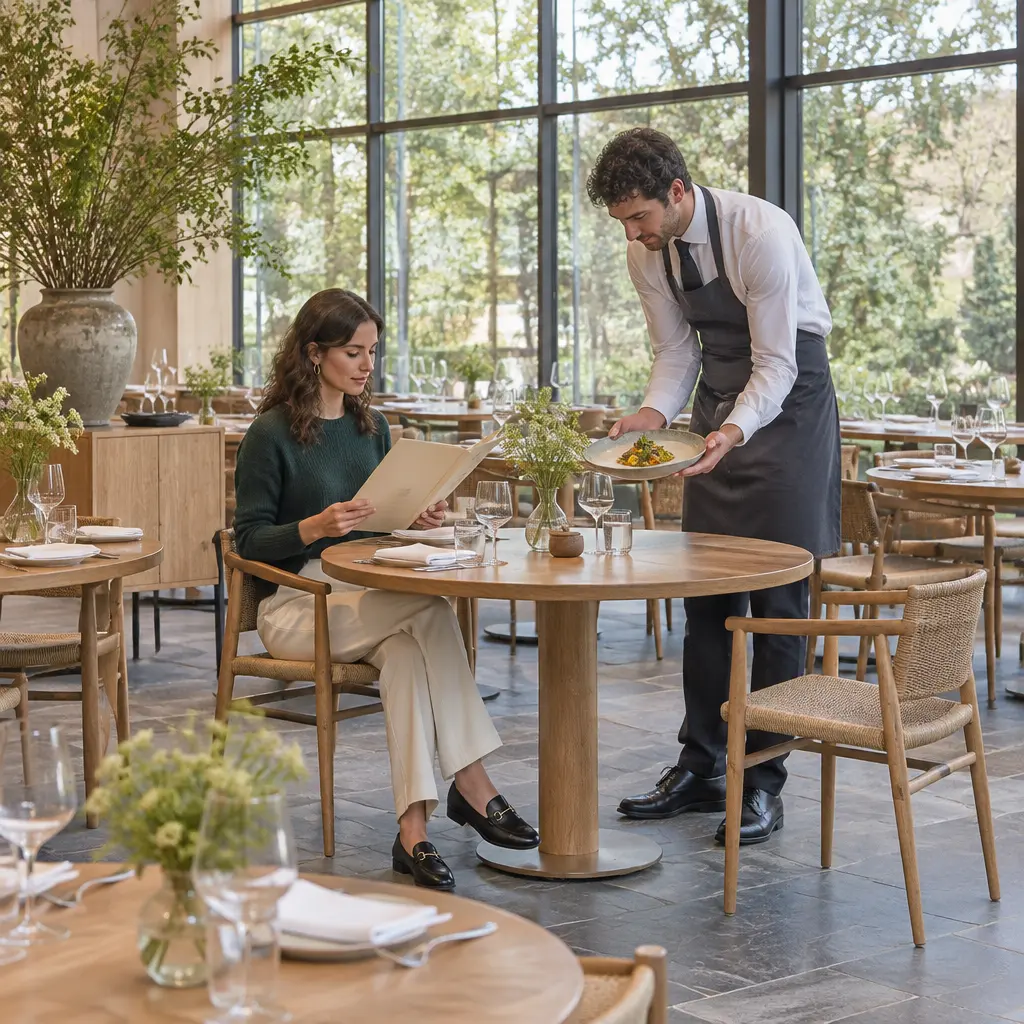
Fine dining value is the relationship between what a guest receives and what a meal asks them to spend—not simply whether the bill is low. A strong value assessment considers price alongside culinary quality, service, setting, hospitality, and the coherence of the restaurant’s story. This matters in a market where the National Restaurant Association reported that 2024 U.S. restaurant sales were projected to reach $1.1 trillion, while diners continued to weigh affordability against experience. Evaluating narrative cohesion alongside price helps explain why a costly meal can feel worthwhile, or an inexpensive one can disappoint: value emerges when the restaurant’s concept, food, service, and price reinforce one another.
Fine Dining Value Is a Cohesive Experience, Not a Price Tag
Fine dining value assessment is a structured judgment of whether the overall experience justifies its financial and nonfinancial costs. It includes tangible elements—food, beverages, service, and atmosphere—as well as less tangible ones such as discovery, emotional resonance, and a sense of occasion. The American Marketing Association defines perceived value in terms of a customer’s evaluation of a product’s benefits relative to its costs. Applied to restaurants, that means a diner compares the whole experience with the price, expectations, and available alternatives.
Narrative cohesion is the degree to which a restaurant’s stated identity is expressed consistently across its menu, ingredients, techniques, service, room, and sourcing choices. It does not require a literal storyline. A restaurant centered on regional seafood, for example, can communicate its narrative through local catch, restrained preparation, coastal materials, and staff who can explain the fishery. If the menu promises local seasonality but relies on unrelated luxury ingredients and generic service, the mismatch can weaken perceived value even when individual dishes are technically accomplished.
The distinction is useful because price alone is an incomplete proxy for quality. Michelin’s Guide evaluates restaurants through criteria including ingredient quality, mastery of technique, harmony of flavors, the chef’s personality expressed through cuisine, and consistency. Those dimensions help explain why an assessment should ask not only “How much did it cost?” but also “What did the restaurant deliver, and did its parts make sense together?” A useful illustration is a value map: plot price on one axis and narrative cohesion on the other, then compare restaurants by experience rather than ranking them by cost alone.
Perceived Value Connects Fine Dining Price to Narrative Cohesion
Perceived value links a guest’s benefits to the money, time, and effort required to obtain them. In a widely cited consumer-value framework, marketing scholar Valarie Zeithaml describes perceived value as an overall assessment of utility based on what is received and what is given. For fine dining, the “received” side may include flavor, hospitality, comfort, cultural insight, and memorability; the “given” side may include the check, travel, time, dietary compromises, and expectations created by the restaurant’s reputation.
Narrative cohesion shapes that balance by helping diners interpret individual details as parts of one intentional experience. Cohesion can make a modest ingredient feel meaningful when its provenance and preparation are thoughtfully explained. Conversely, a high price can feel arbitrary if the service, menu language, and setting imply conflicting levels of formality or ambition. The relevant categories of value therefore extend beyond budget: they include sensory value, service value, symbolic or cultural value, and experiential value.
Sensory and Culinary Value
Sensory value is the pleasure and quality guests perceive through taste, aroma, texture, temperature, and presentation. Culinary value also includes the kitchen’s command of ingredients and technique. Michelin’s inspection framework treats ingredient quality, cooking mastery, flavor harmony, and consistency as core considerations, offering a practical basis for judging whether a restaurant’s execution supports its price.
A cohesive menu gives these qualities direction. A tasting menu built around a season, landscape, or cooking tradition should make that idea perceptible in the sequence of dishes—not merely announce it in promotional copy. For instance, a progression from preserved spring vegetables to fresh herbs and early seafood can communicate seasonality through both flavor and structure. Guests need not agree with every course, but the experience is more legible when the choices feel purposeful.
Service and Hospitality Value
Service value is the practical and interpersonal benefit created by staff, including attentiveness, timing, menu knowledge, accommodation, and warmth. Hospitality is broader: it concerns whether guests feel welcomed and respected. A restaurant’s service style should fit its identity. Informal, conversational guidance may support a relaxed farm-to-table concept, while precise explanations and synchronized pacing may suit a formal tasting menu.
Consistency matters because service is part of the product, not a decorative extra. The Bureau of Labor Statistics classifies food-service work as a substantial U.S. employment sector, reflecting the labor-intensive nature of restaurant operations. That labor has value when it improves the meal—for example, by accommodating an allergy reliably or explaining an unfamiliar ingredient without interrupting conversation. Elaborate gestures alone do not guarantee value if they feel scripted, slow, or disconnected from the restaurant’s character.
Atmosphere and Symbolic Value
Atmosphere is the combined effect of a restaurant’s physical environment, including lighting, sound, layout, materials, and comfort. Symbolic value is the meaning guests attach to dining there: celebration, discovery, status, cultural connection, or participation in a particular food philosophy. These dimensions can justify a premium when they support the meal rather than distract from it.
A room furnished with regional materials can reinforce a restaurant’s local identity, while a quiet dining room can make a technically detailed tasting menu easier to appreciate. But costly décor does not automatically create value. If the setting promises intimacy while acoustics make conversation difficult, or a sustainability narrative is paired with conspicuous waste, the experience contradicts itself. The strongest assessment therefore evaluates atmosphere as evidence of the concept’s coherence, not as a standalone luxury signal.
Narrative Cohesion Makes Fine Dining Value Legible
Narrative cohesion is the alignment between what a restaurant says it is and what guests actually encounter. It can be assessed through four connected signals: concept, menu, service, and operations. The concept frames the promise; the menu translates it into food; service helps guests understand and experience it; and operational choices—such as sourcing, waste practices, and seasonal changes—show whether the promise is sustained behind the scenes.
This is not a demand for theatrical storytelling. A restaurant can be cohesive without long tableside speeches or elaborate branding. The test is whether its decisions make sense together. A small neighborhood restaurant that emphasizes regional cooking might demonstrate cohesion through a concise menu, locally relevant ingredients, and knowledgeable but unpretentious service. A grand dining room can tell a similarly coherent story through formal pacing, an ambitious wine program, and carefully coordinated courses.
Concept-to-Menu Alignment
Concept-to-menu alignment means that dishes express the restaurant’s stated point of view. A menu described as seasonal should change in response to ingredient availability; a restaurant focused on a specific cuisine should show more than a few signature ingredients by demonstrating knowledge of its traditions and regional variation. The menu’s language should also match what arrives at the table: poetic descriptions can raise expectations, so the dish must deliver an experience proportionate to the promise.
Seasonality provides a useful real-world test. The U.S. Department of Agriculture’s seasonal produce guidance documents when many fruits and vegetables are commonly available, though regional growing conditions vary. A restaurant can use that information to explain why a dish changes, but seasonality is not automatically proof of quality or sustainability. Diners should look for credible specificity—such as named farms or clearly described preservation methods—rather than assuming that the word “local” settles the question.
Service-to-Concept Alignment
Service-to-concept alignment describes whether the staff’s manner, timing, and explanations suit the restaurant’s culinary identity and intended level of formality. A chef-led counter may benefit from direct conversation about technique, while a celebratory dining room may prioritize unobtrusive pacing. When service fits the concept, guests receive useful context without being forced into a performance.
A practical measure is whether explanations improve choice or enjoyment. Staff should be able to clarify ingredients, portion sizes, dietary accommodations, and beverage pairings accurately. They should also recognize when a guest wants detail and when they prefer space. This kind of responsiveness contributes more to perceived value than memorized descriptions that do not answer the diner’s actual questions.
Sourcing and Operational Credibility
Operational credibility is the extent to which a restaurant’s sourcing and business practices support its public narrative. Claims about local purchasing, responsible seafood, animal welfare, or waste reduction are strongest when they are specific, verifiable, and reflected in daily decisions. The National Restaurant Association’s industry research regularly identifies sustainability and local sourcing among topics relevant to restaurant operators, but broad industry interest does not establish that any individual restaurant meets a particular standard.
Guests can assess credibility by looking for concrete details: a supplier named on the menu, a clear explanation of a changing catch, or a thoughtful use of by-products. The Monterey Bay Aquarium Seafood Watch program, for example, provides guidance for evaluating seafood choices. Such references can help diners distinguish a substantiated sourcing story from vague green language. Operational alignment can add meaning to a meal, but it should complement—not substitute for—good cooking and fair hospitality.
Price and Value Require Comparable, Contextual Measures
Price is the amount charged; value is the diner’s judgment of what the full experience provides in return. A fair comparison must account for what is included and what is optional. A tasting-menu price may include many courses but exclude beverages, tax, service charge, or gratuity. Another restaurant may offer à la carte choice, making direct comparisons between headline prices misleading.
The Bureau of Labor Statistics’ Consumer Expenditure Surveys track household spending across categories, including food away from home. These data provide context for the pressure diners face, but they do not determine whether a particular restaurant is worth its price. Personal budgets, occasion, location, and expectations differ. A useful review should therefore state the actual outlay and explain what the meal included rather than treating a single dollar figure as a universal verdict.
Total-Cost Transparency
Total-cost transparency means evaluating the likely complete bill, including beverages, supplements, taxes, service charges, and gratuity where applicable. A restaurant that clearly communicates these costs enables guests to choose confidently. Hidden or poorly explained charges can undermine trust even when the food is excellent, because the final cost differs from the expectation established during booking or ordering.
For comparison, diners can record the price of the meal, what it included, and any add-ons they selected. They should also note portion expectations and whether the format is designed as a complete experience or as one part of a larger evening. This approach is more informative than comparing tasting-menu prices without considering course count, beverage inclusions, or service structure.
Price-to-Experience Fit
Price-to-experience fit is the degree to which the total charge feels proportionate to the meal’s execution, coherence, and personal significance. It is not a mathematical ratio: there is no universal dollar amount that defines good value. Rather, diners can ask whether the price was supported by reliable cooking, thoughtful pacing, attentive service, a distinctive point of view, and an experience that met the stated promise.
This distinction makes room for different kinds of value. A lower-cost restaurant may deliver exceptional value through focused cooking and genuine hospitality. A more expensive restaurant may justify its premium with rare ingredients, complex preparation, or a memorable setting—but only if those features contribute to the experience. Price can signal ambition, but it cannot prove quality, authenticity, or cohesion on its own.
A Practical Framework Assesses Fine Dining Value
A practical assessment combines objective observations with personal response. The goal is not to assign every diner the same score, but to make the reasoning behind a judgment clear. The following dimensions can be rated on a simple five-point scale, with notes explaining each rating:
- Food execution: ingredient quality, technique, flavor balance, temperature, and consistency.
- Narrative cohesion: fit among concept, menu, sourcing, service, and setting.
- Hospitality: attentiveness, accuracy, comfort, and respect for preferences.
- Atmosphere: acoustics, lighting, seating comfort, and suitability for the occasion.
- Price transparency: clarity about inclusions, supplements, and the likely final bill.
- Personal significance: enjoyment, discovery, cultural connection, or suitability for the occasion.
Scores should not be treated as a scientific index. A diner who values quiet conversation may rate a lively room differently from someone seeking energy, while a person with dietary restrictions may place greater weight on accommodation. The narrative-cohesion score is especially useful as a diagnostic: if the food is strong but the experience feels disjointed, notes can identify whether the mismatch came from menu claims, service, or setting.
Case Example: A Seasonal Restaurant
Consider a hypothetical restaurant charging a premium for a seasonal tasting menu. It names several regional suppliers, changes courses as ingredients become available, and has staff explain substitutions plainly. Its dishes show technical skill, and the pacing gives guests time to appreciate the sequence. Even if the bill is high, the restaurant’s sourcing, menu, service, and culinary execution support one another, making the price easier to understand as part of a unified experience.
Now imagine the same restaurant advertises local seasonality but serves a largely static menu, cannot identify suppliers, and offers explanations that conflict with the dishes. The price has not changed, but the perceived value may fall because the narrative lacks operational support. This comparison illustrates why coherence is not an ornamental concern: it helps diners judge whether the restaurant’s promise is reflected in what they actually receive.
Conclusion: Fine Dining Value Depends on What the Price Delivers
Fine dining value assessment is strongest when it connects perceived value, narrative cohesion, and transparent price comparison. Culinary execution, hospitality, atmosphere, and sourcing each contribute, but their combined effect matters most when they express a consistent point of view. A high price may be justified by a distinctive and well-executed experience, while a lower price may offer outstanding value through clarity, skill, and warmth.
For diners, the practical next step is to compare the complete cost with the restaurant’s promise and the experience delivered—not with price alone. For restaurateurs, the implication is equally direct: communicate costs clearly, make the concept visible in everyday decisions, and ensure that service and operations support the food. Further reading from Michelin, the U.S. Department of Agriculture, and Seafood Watch can help readers evaluate culinary standards, seasonality, and sourcing claims with greater confidence.
Sources: National Restaurant Association, 2024 State of the Restaurant Industry Report, https://restaurant.org/research-and-media/research/research-reports/state-of-the-restaurant-industry/; American Marketing Association, “Perceived Value,” https://www.ama.org/topics/consumer-behavior/; Zeithaml, Valarie A., “Consumer Perceptions of Price, Quality, and Value: A Means-End Model and Synthesis of Evidence,” Journal of Marketing, https://doi.org/10.1177/002224298805200302; Michelin Guide, “What Are the Michelin Guide’s Criteria?”, https://guide.michelin.com/en/article/features/what-is-a-michelin-star; U.S. Bureau of Labor Statistics, Consumer Expenditure Surveys, https://www.bls.gov/cex/; U.S. Bureau of Labor Statistics, Food and Beverage Serving and Related Workers, https://www.bls.gov/ooh/food-preparation-and-serving/food-and-beverage-serving-and-related-workers.htm; U.S. Department of Agriculture, Seasonal Produce Guide, https://snaped.fns.usda.gov/resources/nutrition-education-materials/seasonal-produce-guide; Monterey Bay Aquarium Seafood Watch, Seafood Recommendations, https://www.seafoodwatch.org/recommendations


