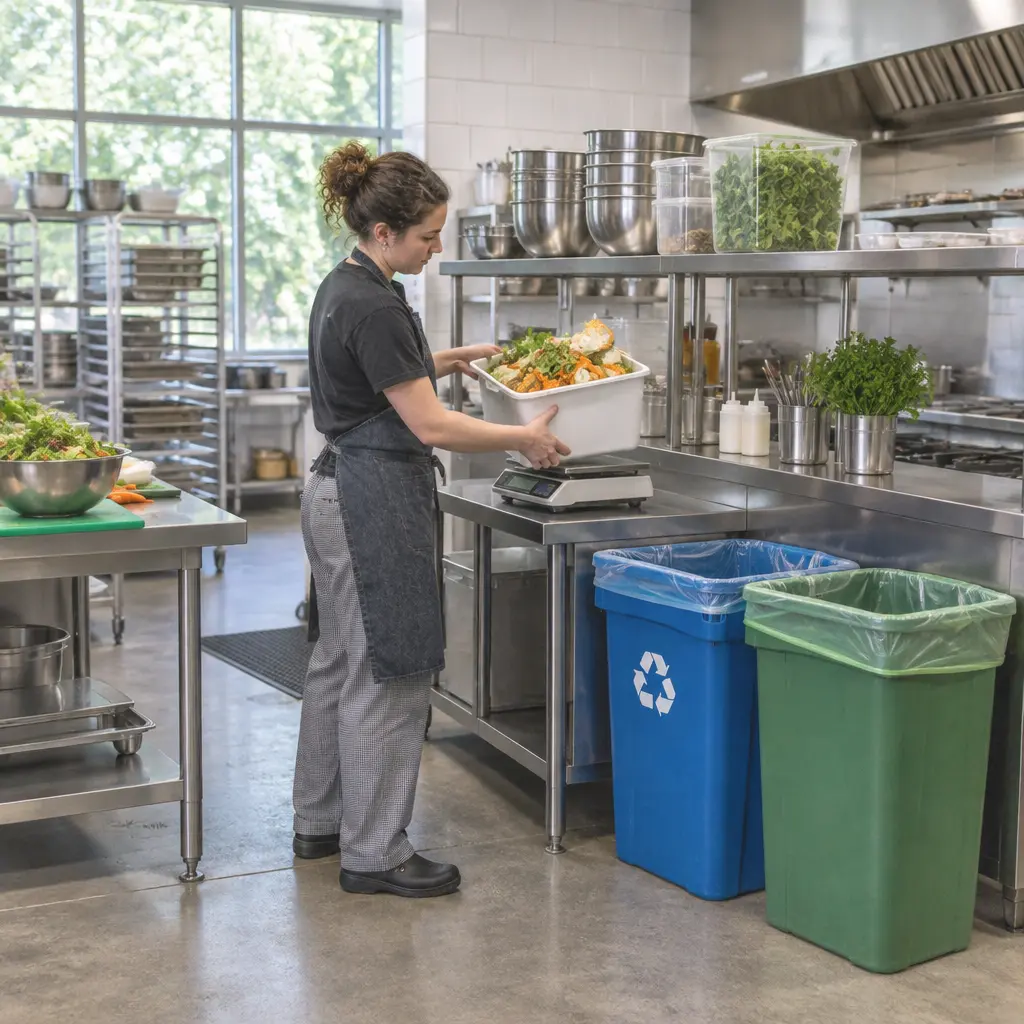
Sustainable operations verification is the independent, evidence-based assessment of whether a food business manages its environmental and social impacts as claimed. It goes beyond farm-to-table marketing by tracing waste across purchasing, production, service, and disposal—and checking records, measurements, and downstream destinations. The U.S. Environmental Protection Agency (EPA) estimates that 30–40% of the U.S. food supply is wasted; meanwhile, food waste in landfills generates methane, a potent greenhouse gas. Auditing waste streams can reveal where material is lost, whether prevention and recovery claims hold up, and what operational changes will produce measurable results.
Waste-Stream Verification Defines Sustainable Operations Auditing
A waste-stream audit is a systematic examination of materials discarded by an operation, including their sources, quantities, handling, and final destinations. For sustainable operations verification, the audit is broader than a one-time trash sort: it tests whether reported performance is supported by consistent methods and traceable evidence. The EPA’s Sustainable Materials Management framework emphasizes considering materials across their life cycles, rather than focusing only on disposal.
The relevant waste streams may include food scraps, packaging, cooking oil, wastewater, cleaning chemicals, and equipment or construction debris. Auditors distinguish prevention from diversion: preventing edible food from becoming waste generally has greater environmental value than recycling or composting material after it has been discarded. A credible review therefore checks both the amount generated and the hierarchy of actions taken.
Measurement and Material Characterization
Material characterization means identifying and measuring what enters each waste stream. An auditor may sort a representative sample of bins by category, weigh it, and compare results with purchasing, production, and sales records. A defined sampling period should account for day-of-week patterns, seasonality, menu changes, and exceptional events. Reporting results as kilograms per meal served, per cover, or per unit of revenue makes comparisons more meaningful than relying on total weight alone.
The measurement method matters. EPA’s Waste Reduction Model (WARM) can estimate greenhouse-gas impacts of different material-management pathways, but such estimates depend on inputs and assumptions. Auditors should disclose the boundary, conversion factors, exclusions, and uncertainty behind any emissions figure instead of presenting modeled results as direct measurements.
Traceability and Destination Verification
Destination verification tests whether material said to be donated, recycled, or composted reached the claimed recipient or processor. Useful evidence includes dated weight tickets, donation receipts, hauler invoices, processor reports, and contracts specifying accepted materials. Auditors can reconcile these records against internal logs and check whether contamination, rejected loads, or changes in service altered the reported outcome.
This step is essential because a collection label does not establish a final outcome. A restaurant may separate organics correctly, yet a load can be rejected or handled differently downstream. The audit should distinguish “collected for recycling” from “confirmed recycled,” and distinguish food donated from food merely prepared for donation.
Waste Prevention and Recovery Strengthen Sustainable Operations Verification
Once the material flows are measured, the audit can test whether an operation addresses waste at its source. The EPA’s food recovery hierarchy prioritizes source reduction, followed by feeding people, feeding animals, industrial uses, composting, and—in general—landfill or incineration. This ordering helps auditors assess whether a diversion claim reflects a preferred intervention or simply a change in disposal route.
Source Reduction and Food Loss Prevention
Source reduction prevents surplus from being generated through practices such as demand forecasting, inventory rotation, portion adjustments, and production planning. The World Resources Institute’s Food Loss and Waste Protocol provides a common framework for defining, measuring, and reporting food loss and waste within a specified scope. Applying consistent definitions helps businesses avoid counting the same material differently across sites or reporting periods.
A practical verification program pairs waste weighing with operational indicators: purchases, menu mix, covers served, spoilage, and plate waste. For example, a reduction in total discarded food could reflect fewer customers rather than improved efficiency; a per-meal metric and sales context help interpret the change. Auditors can also review whether staff training and forecasting procedures are documented and used in practice.
Donation, Composting, and Recycling Claims
Donation verification concerns edible surplus intended for human consumption. Records should identify quantities, dates, recipient organizations, and any food-safety controls. The U.S. Department of Agriculture and EPA encourage food recovery as a means of keeping edible food available to people, but operational claims still require evidence of actual transfer and acceptance.
Composting and recycling verification requires checking what materials the local facility accepts, whether loads meet its specifications, and how rejected material is handled. A business should not report all separated organics as composted without processor documentation. Similarly, recycling performance should be based on accepted material or documented processing, not merely the presence of labeled bins.
Audit Controls and Data Quality Support Sustainable Operations Verification
A verification result is only as reliable as its boundary, records, and controls. The Greenhouse Gas Protocol’s corporate accounting standards illustrate a broader principle relevant to waste audits: organizations need clear organizational and operational boundaries, consistent methods, and transparent reporting. Waste audits should likewise define which locations, activities, materials, contractors, and time periods are included.
Reconciliation, Sampling, and Assurance
Reconciliation compares independently generated records—for example, internal scale logs with hauler invoices and processor receipts. Differences may arise from moisture loss, container tare weights, mixed loads, or reporting periods that do not align. A documented reconciliation process should explain material discrepancies rather than silently adjusting totals.
Sampling is useful when a full sort is impractical, but the sample must be representative and repeatable. Auditors should document sample selection, weighing equipment, calibration, sorting rules, and treatment of unidentifiable material. Independent review can add confidence, while internal audits can provide more frequent operational feedback; the two serve different purposes and should not be confused.
Green Claims and Reporting Boundaries
Environmental claims should be specific, qualified, and supported by evidence. The U.S. Federal Trade Commission’s Green Guides caution against broad, unqualified claims such as “green” or “eco-friendly” when their meaning and substantiation are unclear. In waste reporting, terms such as “zero waste,” “landfill-free,” and “100% diverted” should state the scope, period, exclusions, and calculation method.
For example, a claim may cover one location but not company-wide operations, or may exclude construction debris and wastewater. A verifier should test whether the wording matches the evidence and whether exclusions could materially change the impression conveyed to customers or investors.
Operational Case Studies Show Why Auditing Must Extend Beyond the Farm
Farm-to-table sourcing can describe ingredient origin, but it does not by itself establish efficient storage, low kitchen waste, responsible packaging, or verified disposal. The EPA’s national estimate that 30–40% of the U.S. food supply is wasted underscores why procurement narratives need to be complemented by measurement across the full food-service operation.
Restaurant Kitchen and Service Audits
A restaurant audit can separate back-of-house preparation scraps, spoilage, and front-of-house plate waste. If weighing shows recurring losses in a specific ingredient, purchasing and menu-planning records can identify whether the cause is over-ordering, poor storage, trimming practices, or demand variability. A subsequent audit can test whether the intervention reduced waste per meal rather than merely shifting it to another bin.
The audit can also map non-food streams, including cardboard, glass, cooking oil, and single-use packaging. Comparing invoices and weight tickets with site logs helps establish whether contractor-reported diversion corresponds to the restaurant’s actual material generation.
Institutional and Multi-Site Operations
Schools, hospitals, hotels, and restaurant groups face different menus, service volumes, and local processing options. A common measurement protocol makes site comparisons possible while allowing local conditions to be recorded. Central teams can use normalized indicators to identify outliers, then investigate whether they reflect avoidable waste, measurement differences, or local infrastructure constraints.
A useful dashboard would show waste generated per meal, edible food recovered, material confirmed at downstream facilities, contamination or rejection rates, and year-over-year changes. These measures should be accompanied by narrative notes on boundary changes and data gaps so that apparent progress is not mistaken for a real operational improvement.
Conclusion: Verified Waste Data Makes Sustainability Claims Actionable
Waste-stream verification turns sustainable operations from a marketing assertion into a testable management practice. Measurement and characterization reveal what is discarded; traceability confirms where it goes; prevention and recovery audits assess whether higher-value interventions are prioritized; and data controls ensure that reported results are credible. In a food system where the EPA estimates that 30–40% of the U.S. food supply is wasted, these checks matter for climate impact, resource efficiency, food recovery, and public trust.
Businesses can begin by defining audit boundaries, establishing a consistent baseline, weighing representative waste streams, and reconciling internal records with hauler and processor documentation. They should publish precise claims with clear exclusions and repeat measurements after operational changes. Further reading from the EPA, USDA, World Resources Institute, and Federal Trade Commission can help organizations develop methods suited to their facilities and reporting needs.
Sources: U.S. Environmental Protection Agency, Sustainable Management of Food, https://www.epa.gov/sustainable-management-food; U.S. Environmental Protection Agency, Food Recovery Hierarchy, https://www.epa.gov/sustainable-management-food/food-recovery-hierarchy; U.S. Environmental Protection Agency, Waste Reduction Model (WARM), https://www.epa.gov/warm; World Resources Institute, Food Loss and Waste Accounting and Reporting Standard, https://www.wri.org/research/food-loss-and-waste-accounting-and-reporting-standard; U.S. Department of Agriculture, Food Loss and Waste, https://www.usda.gov/foodlossandwaste; U.S. Federal Trade Commission, Guides for the Use of Environmental Marketing Claims (Green Guides), https://www.ftc.gov/legal-library/browse/rules/green-guides; Greenhouse Gas Protocol, Corporate Standard, https://ghgprotocol.org/corporate-standard.