
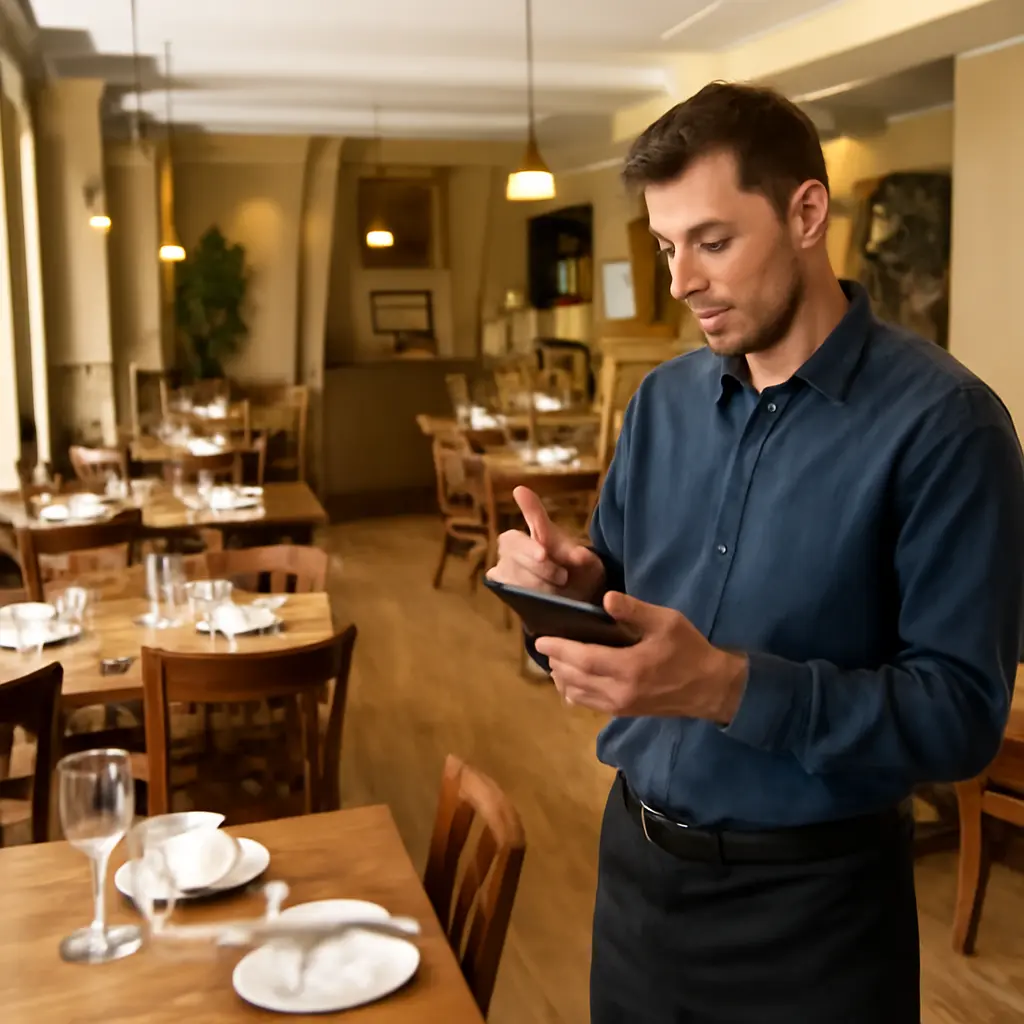
Digital ordering platforms—such as QR-code menus, tableside tablets, and restaurant apps—are changing how guests place orders and how servers coordinate service. Their expansion is backed by broader consumer adoption: the National Restaurant Association reported in its 2024 State of the Restaurant Industry research that 70% of consumers surveyed were interested in using technology to make ordering or payment more convenient. These tools do not simply replace a paper menu; they can shift servers’ work toward hospitality, accuracy, and problem-solving while creating new demands around system integration, accessibility, privacy, and staff training. Understanding the technology, its service models, and its trade-offs helps restaurants adopt digital ordering without losing the human connection that defines table service.
Digital Ordering Platforms reshape table-service operations
A digital ordering platform is a software-based system that enables guests or staff to browse a menu, submit food and beverage selections, and often pay through a connected device. The National Restaurant Association’s technology research describes restaurant technology in terms of tools that support ordering, payment, operations, and guest engagement. In table service, the platform may be guest-facing, staff-facing, or a combination of both: diners can order directly from a QR-code menu, servers can enter orders on a handheld device, or guests can use a tableside tablet.
The attribute that matters is not simply “digital.” It is how the platform changes the service sequence: menu discovery, order capture, kitchen transmission, payment, and follow-up. A 2024 Toast survey found that 64% of surveyed restaurant guests preferred ordering from a server, while 36% preferred ordering through technology. The result points to a mixed-preference market rather than a universal move away from people. Digital systems are therefore reshaping table service most effectively when they give guests options and help employees deliver attentive service.
Guest-facing ordering: QR menus and mobile ordering
Guest-facing ordering lets diners review menus and place orders from their own phones or a restaurant-provided device. QR-code menus typically open a web page without requiring a dedicated app; mobile ordering may connect to a restaurant account, loyalty program, or payment wallet. These approaches can make menu updates faster and allow guests to submit selections when ready, but they depend on reliable connectivity, readable design, and clear instructions.
The National Restaurant Association’s 2024 report found that 70% of consumers surveyed were interested in technology that makes ordering or payment more convenient. Interest does not mean every guest wants to order without a server. Restaurants should preserve a clearly visible way to request assistance and offer printed menus or staff-led ordering for guests who do not have a suitable phone, prefer personal guidance, or need accessibility accommodations.
Staff-facing ordering: handheld point-of-sale systems
A handheld point-of-sale system allows servers to enter orders at the table and send them directly to the kitchen or bar. Compared with walking to a stationary terminal, a handheld can reduce repeated trips and help employees confirm modifications while speaking with guests. It is a staff-facing digital platform, not self-service: the server remains central to recommendations, pacing, and hospitality.
The operational benefit depends on accurate setup. Menu modifiers, allergy notes, coursing, and routing rules must be configured carefully, and workers need training to avoid errors caused by rushed or unfamiliar data entry. The U.S. Bureau of Labor Statistics describes food-and-beverage serving work as involving customer interaction, order taking, and coordination with kitchen staff—responsibilities that handheld systems can support but cannot perform with judgment or empathy.
Tableside tablets and hybrid service
Tableside tablets place a restaurant-controlled ordering interface at the table. Depending on the concept, guests may use them to browse, customize dishes, request service, or pay, while employees remain available to explain ingredients and resolve issues. Hybrid service combines these digital functions with traditional server interaction, allowing guests to choose when they want self-service and when they want assistance.
The hybrid model is especially relevant where ordering includes complex choices. A tablet may make modifiers or product details easy to review, while a knowledgeable server can explain preparation methods, substitutions, or wine pairings. Restaurants should assess whether a device enhances the experience or distracts from conversation; the right choice varies by cuisine, price point, dining occasion, and customer expectations.
Digital Ordering Platforms improve service flow and restaurant data
Once an order is captured digitally, the platform can connect front-of-house activity with kitchen display systems, payment tools, inventory records, and customer relationship software. This connectivity can reduce re-entry of orders and create operational data about popular dishes, modifications, and busy periods. The benefit is not automatic: systems must communicate reliably, and managers must interpret data in context rather than treating every recorded pattern as a complete picture of guest preferences.
Order accuracy, kitchen routing, and pacing
Digital order transmission sends selections and modifiers to the appropriate preparation station, reducing the need for staff to relay handwritten tickets or retype information. Kitchen display systems can organize orders by station and status, while coursing tools help coordinate when dishes are prepared and served. These capabilities can support accuracy and pacing, especially in restaurants with extensive menus or high order volume.
The National Restaurant Association has identified labor availability and operating costs as continuing industry concerns in its State of the Restaurant Industry reports. Automation can help staff handle routine steps, but it does not eliminate the need for clear communication when a dish is delayed, a substitution is unavailable, or an allergy request requires confirmation. Managers should monitor voids, remakes, ticket times, and guest feedback to determine whether the technology is improving service in practice.
Payments, tipping, and check management
Integrated payment tools can let guests split checks, pay at the table, or settle a bill through an app or contactless terminal. For servers, completing payment at the table may reduce trips to a cashier station and give guests more control over the timing of departure. Digital payment also creates sensitive responsibilities: restaurants need secure handling of payment data, transparent tip prompts, and a non-digital payment alternative when requested.
The Federal Reserve’s 2024 Diary of Consumer Payment Choice reported that consumers made an average of 11 payments per month with credit cards and 7 with debit cards in 2023, illustrating the importance of card-based payment in everyday commerce. That national pattern does not determine what every restaurant guest prefers, but it makes reliable payment integration a core part of the table-service experience.
Personalization, loyalty, and restaurant analytics
When guests opt in, ordering platforms can connect purchases with loyalty accounts, saved preferences, or promotional offers. Aggregated sales data can help managers identify high-demand items, compare performance across shifts, and plan inventory. These are forms of restaurant analytics: the use of operational and transaction data to inform decisions about menus, staffing, and marketing.
Personalization must be balanced with privacy. The Federal Trade Commission advises businesses to collect only data they need, protect it, and explain how it is used. Restaurants should make consent and opt-out choices understandable, limit access to customer information, and avoid implying that a guest must create an account to receive ordinary table service.
Digital Ordering Platforms create new service, access, and security challenges
Digital ordering can streamline routine interactions, but poorly designed systems may shift work onto guests, frustrate employees, or exclude people who cannot readily use the interface. The platform’s success should therefore be measured not only by transaction speed or sales, but also by accessibility, order quality, staff workload, guest satisfaction, and resilience when technology fails.
Accessibility and inclusive design
Accessible ordering means that people with disabilities and different levels of digital confidence can understand and use the menu and complete an order. A mobile interface should support screen readers, keyboard navigation, sufficient contrast, scalable text, and clear language. A QR-only system can create barriers for guests without a smartphone, with limited data access, or who find small screens difficult to use.
The U.S. Census Bureau reported that about 13.9% of the civilian, noninstitutionalized population had a disability in 2022. That figure underlines why accessible design is not a niche concern. Restaurants can support inclusion by keeping staff-led ordering available, offering accessible digital menus, maintaining printed menus, and training employees to provide assistance respectfully.
Privacy, cybersecurity, and payment protection
A restaurant’s digital ordering environment may handle names, contact details, purchase histories, and payment information. Each connection among a menu, point-of-sale system, payment processor, and loyalty platform can introduce security and privacy considerations. Businesses should use reputable vendors, restrict employee permissions, keep software updated, and establish procedures for suspected incidents.
The Federal Trade Commission’s business guidance emphasizes reasonable data security practices, including collecting only necessary information and protecting it throughout its lifecycle. Restaurants should also review vendor contracts and clarify who is responsible for securing data. A simpler ordering flow that collects less personal information may be preferable to an elaborate system with features guests do not need.
Labor, training, and the human element
Digital tools change the composition of service work rather than making hospitality unnecessary. Servers may spend less time carrying orders or processing payments and more time guiding guests, checking on meals, and resolving exceptions. At the same time, they may need to troubleshoot devices, explain digital processes, and monitor orders moving across multiple systems.
The National Restaurant Association’s 2024 industry research continued to identify recruitment and retention as important operational issues. Training should therefore cover both technical tasks and interpersonal service: how to help a guest use a platform without pressure, how to confirm a complex order, and how to switch smoothly to a manual process during an outage. Technology works best when employees understand its limits and have authority to correct problems.
Reliability, integration, and practical adoption
Reliability is the ability of connected ordering components to function consistently during service. If a QR menu, point-of-sale system, kitchen display, or payment gateway fails, an otherwise efficient workflow can stall. Integration quality matters too: duplicated items, missing modifiers, and mismatched prices can erode trust and create extra labor.
Restaurants can reduce risk by piloting a platform in a limited setting, testing common and unusual orders, documenting outage procedures, and gathering feedback from guests and employees. Useful measures include order accuracy, average ticket time, payment completion time, system downtime, guest satisfaction, and staff-reported friction. A chart comparing these indicators before and after implementation can show whether the system is improving service or merely moving work from one stage to another.
Digital Ordering Platforms point toward flexible, human-centered table service
Digital ordering platforms are reshaping table service by changing how orders are placed, transmitted, paid for, and analyzed. Guest-facing QR menus and tablets offer convenience; staff handhelds can support order capture; integrated systems can improve routing, payment, and operational insight. Yet adoption also raises practical questions about accessibility, privacy, reliability, labor, and the value of direct human interaction.
The strongest approach is not necessarily the most automated one. Restaurants should match technology to their service style, offer meaningful alternatives, involve employees in implementation, and evaluate results using both operational metrics and guest feedback. For operators considering a platform, the next step is to map the current service journey, identify a specific problem to solve, and run a measured pilot before making a full-scale commitment.
Sources: National Restaurant Association, 2024 State of the Restaurant Industry Report, https://restaurant.org/research-and-media/research/research-reports/state-of-the-restaurant-industry/; Toast, Restaurant Technology and Consumer Preferences Survey, https://pos.toasttab.com/news/restaurant-technology-consumer-preferences; U.S. Bureau of Labor Statistics, Food and Beverage Serving Workers, https://www.bls.gov/ooh/food-preparation-and-serving/food-and-beverage-serving-workers.htm; Federal Reserve, 2024 Diary of Consumer Payment Choice, https://www.federalreserve.gov/paymentsystems/2024-findings-from-the-diary-of-consumer-payment-choice.htm; Federal Trade Commission, Protecting Personal Information: A Guide for Business, https://www.ftc.gov/business-guidance/resources/protecting-personal-information-guide-business; U.S. Census Bureau, American Community Survey, Disability Characteristics, 2022, https://data.census.gov/.


